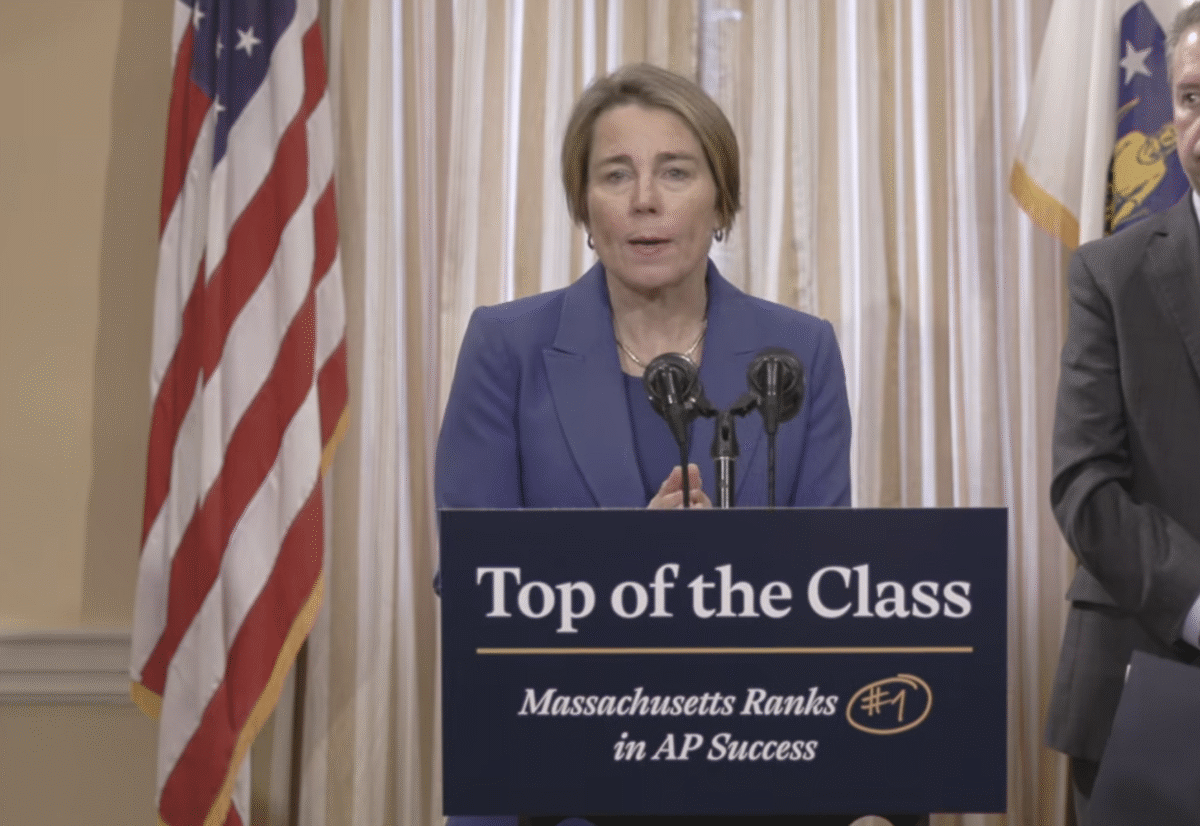

Massachusetts Gov. Maura Healey faced repeated challenges over affordability, government spending and her record Thursday as Republican challenger Mike Minogue used their first gubernatorial debate to attack a controversial $2 billion Springfield courthouse deal and accuse Democrats of making the state increasingly unaffordable.
Healey, meanwhile, repeatedly tried to tie Minogue to President Donald Trump, turning the hourlong matchup into a test of whether voters will focus on the president's influence or the state's own economic problems.
The candidates' first face-to-face debate, hosted by WBZ-TV, featured sharp exchanges over energy costs, taxes, housing and the governor's decision to pursue a new courthouse through a long-term lease arrangement.
Healey invoked Trump throughout the debate, arguing that Minogue supports the president's agenda on immigration, energy and the economy. Minogue, a former business executive and combat veteran, pushed back by emphasizing his independence and insisting that the governor's job is to focus on Massachusetts rather than Washington.
"I'm running for governor, and the governor cares about Massachusetts," Minogue said.
Affordability remains a central vulnerability for Healey as residents face high utility bills and housing costs.
Minogue called for eliminating the state's gas tax and a $130 utility fee, arguing that the changes would return thousands of dollars to residents' pockets.
Healey blamed Trump and her opponent for contributing to rising energy prices, citing their opposition to renewable energy investments. But her own proposal for a two-month gas tax holiday has stalled in the Democrat-controlled Legislature, raising questions about how much immediate relief the governor can deliver before Election Day.
The Springfield courthouse became another major point of contention.
Minogue attacked the proposed project as an example of government waste, repeatedly citing its roughly $2 billion price tag. Healey countered that construction itself is expected to cost approximately $463 million, arguing that the aging, mold-infested courthouse needs to be replaced.
But the distinction does not eliminate concerns over the project's overall cost. The state's arrangement includes lease payments exceeding $1.6 billion over 40 years, with the potential for two additional decade-long extensions, according to The Boston Globe's breakdown of the project.
The debate also included an argument over a federal scholarship tax credit program. Minogue accused Healey of putting partisan politics ahead of students, while the governor maintained that she was reviewing the proposal.
The two candidates frequently spoke over one another, prompting moderator Jon Keller to intervene.
Massachusetts voters will have another opportunity to see the candidates face off ahead of the Nov. 3 election. Early voting runs from Oct. 17 through Oct. 30.