
Connecticut Republicans are pushing Gov. Ned Lamont to suspend the state's gas and diesel taxes through the end of the year as fuel prices surge and voters head toward the November election.
House Republican Leader Vincent Candelora and Senate Republican Leader Stephen Harding called for a special legislative session last week to suspend the state's 25-cent-per-gallon gasoline tax and 49.9-cent diesel tax through Dec. 31.
The proposal would save drivers about $2.75 per 11-gallon tank of gas and $5.49 per 11 gallons of diesel, according to Republicans.
The timing comes as prices at the pump have climbed sharply.
The latest AAA figures put Connecticut's average regular gas price at $4.4623 on Oct. 2, compared with $3.1334 a year earlier. Diesel reached $6.4779, up from $3.7810 a year ago.
Republicans say Connecticut has the money to provide temporary relief.
The state's Special Transportation Fund is projected to end the fiscal year with a $643.4 million balance, according to state fiscal estimates. Suspending the two taxes through the end of the year would cost an estimated $128 million.
Connecticut already did something similar in 2022, when lawmakers suspended the state's 25-cent gas tax. Drivers saved nearly $275 million during that suspension, according to state figures. The tax was gradually restored during the first four months of 2023.
Candelora says Democrats had their chance to provide relief earlier this year. “The Governor saw this coming. Democrats saw this coming,” he said, arguing that lawmakers discussed a gas-tax suspension in March but failed to act.
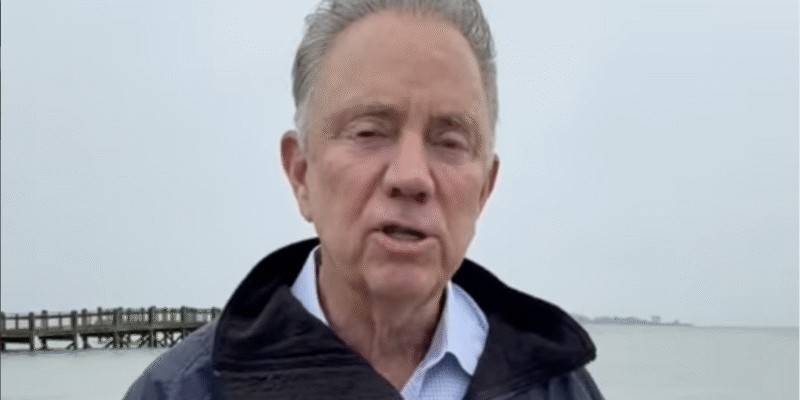
Lamont has pushed back, arguing that the gas tax funds Connecticut's roads, bridges and transportation system. He also says the state's fuel prices are being driven largely by the war with Iran and federal policy.
Republicans counter that Connecticut can use its transportation reserves for temporary relief without abandoning infrastructure spending.
The proposal would need Lamont and the Democratic-controlled legislature to agree to a special session.
For now, drivers are left paying the higher prices while Hartford debates whether a state with hundreds of millions of dollars in transportation reserves can afford to give them a break.